
A farmhouse patio on a rural property does more than add a place to sit. It becomes a transition space between the house and the land, a spot for morning coffee, weekend dinners, and evenings when the sky is wide open. The best designs borrow from traditional country building while handling real conditions like wind, open sun, uneven ground, and long winters. This guide walks through the ideas that work best and the practical details that matter before you build.
Table of Contents
- Why Farmhouse Patios Suit Rural Homes
- Choosing Materials That Handle Rural Weather
- Idea 1: Covered Porch Seating
- Idea 2: A Rustic Porch Swing
- Idea 3: A Dining Zone with a View
- Idea 4: A Swing Bench Against a Barn Wall
- Planning Shade and Comfort
- Layout, Privacy, and Flow
- Frequently Asked Questions
Why Farmhouse Patios Suit Rural Homes
Farmhouse style grew out of practical needs, so its patio ideas tend to be sturdy, simple, and easy to repair. That makes the style a natural fit for rural properties, where distance from town and changing weather make low-maintenance choices more valuable. A well-planned farmhouse patio usually offers:
- Durable surfaces such as stone, wood, or weather-resistant composite
- Furniture that can handle wind, dust, and occasional rain
- Open sightlines to fields, gardens, or tree lines
- Warm, natural textures like weathered wood, metal, and woven fabrics
Because rural lots are often large, it helps to think of the patio as a set of small outdoor rooms rather than one large slab. A lounge area, a dining area, and a quiet corner can all share the same footprint while serving different moods and times of day.
Choosing Materials That Handle Rural Weather
Material choice matters more in the country than in a suburban yard. Strong sun, freezing nights, and blowing dust all take a toll. Wood gives the most traditional look but needs regular care, while newer options trade some natural feel for lower upkeep. The table below compares common choices for farmhouse-style patios.
For walls, privacy screens, or pergola panels, composite cladding is worth considering. It can mimic the look of painted or stained boards without the same rot risk, which is useful where moisture collects near the ground or where the patio faces the weather.
Idea 1: Covered Porch Seating
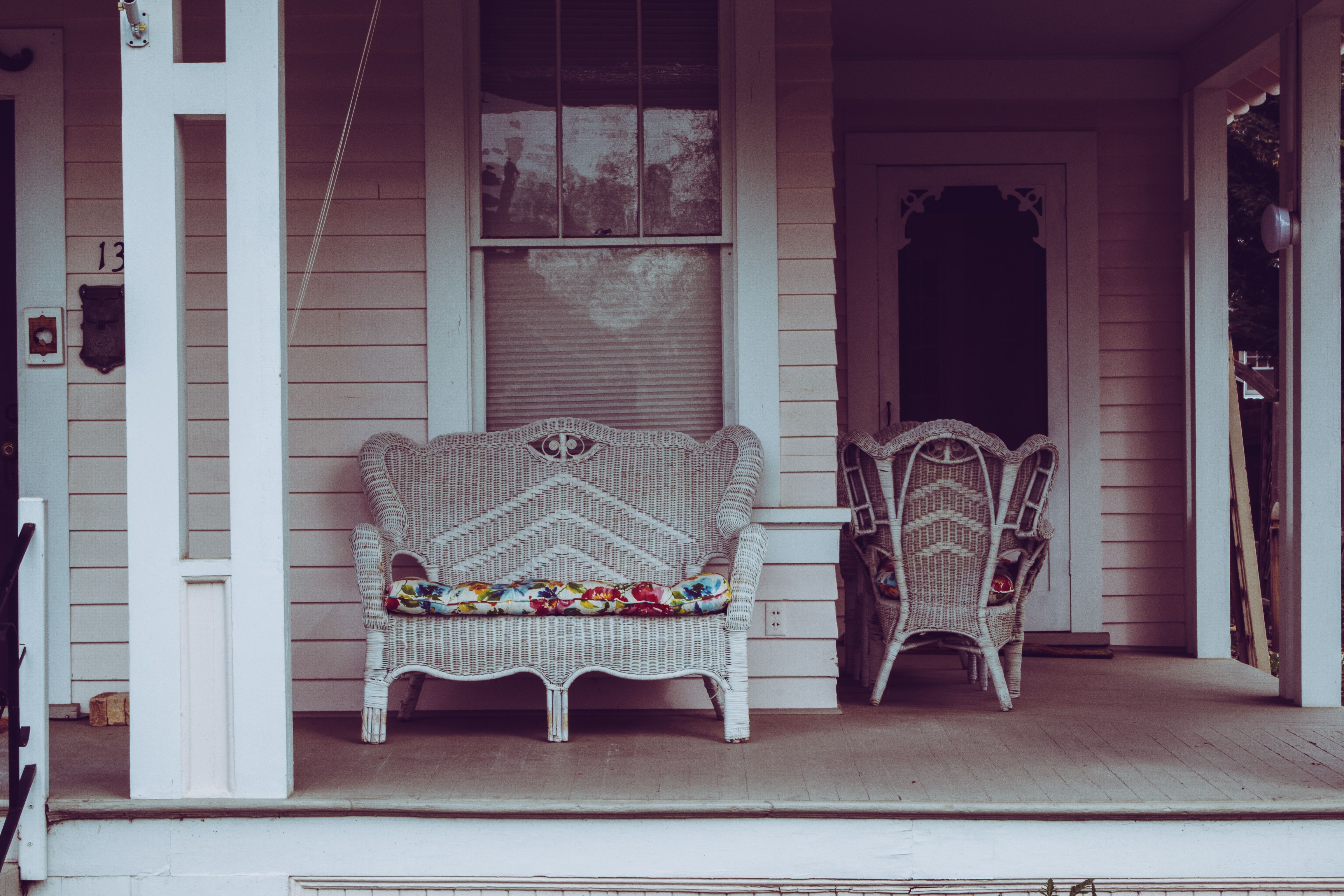
A roofed porch is one of the most effective ways to make a patio usable through more of the year. The roof blocks direct sun and light rain, so furniture stays drier and guests can sit comfortably even on warm afternoons. Farmhouse porches often use white or pale-painted frames, simple turned posts, and light wicker or painted wood chairs. Soft cushions in floral or checked fabrics add color without making the space feel busy.
When planning porch seating, consider:
- Choosing cushions with outdoor-rated, quick-dry fabric
- Leaving at least 36 inches of walking space between chairs and the door
- Placing a side table within reach of each seat
Idea 2: A Rustic Porch Swing
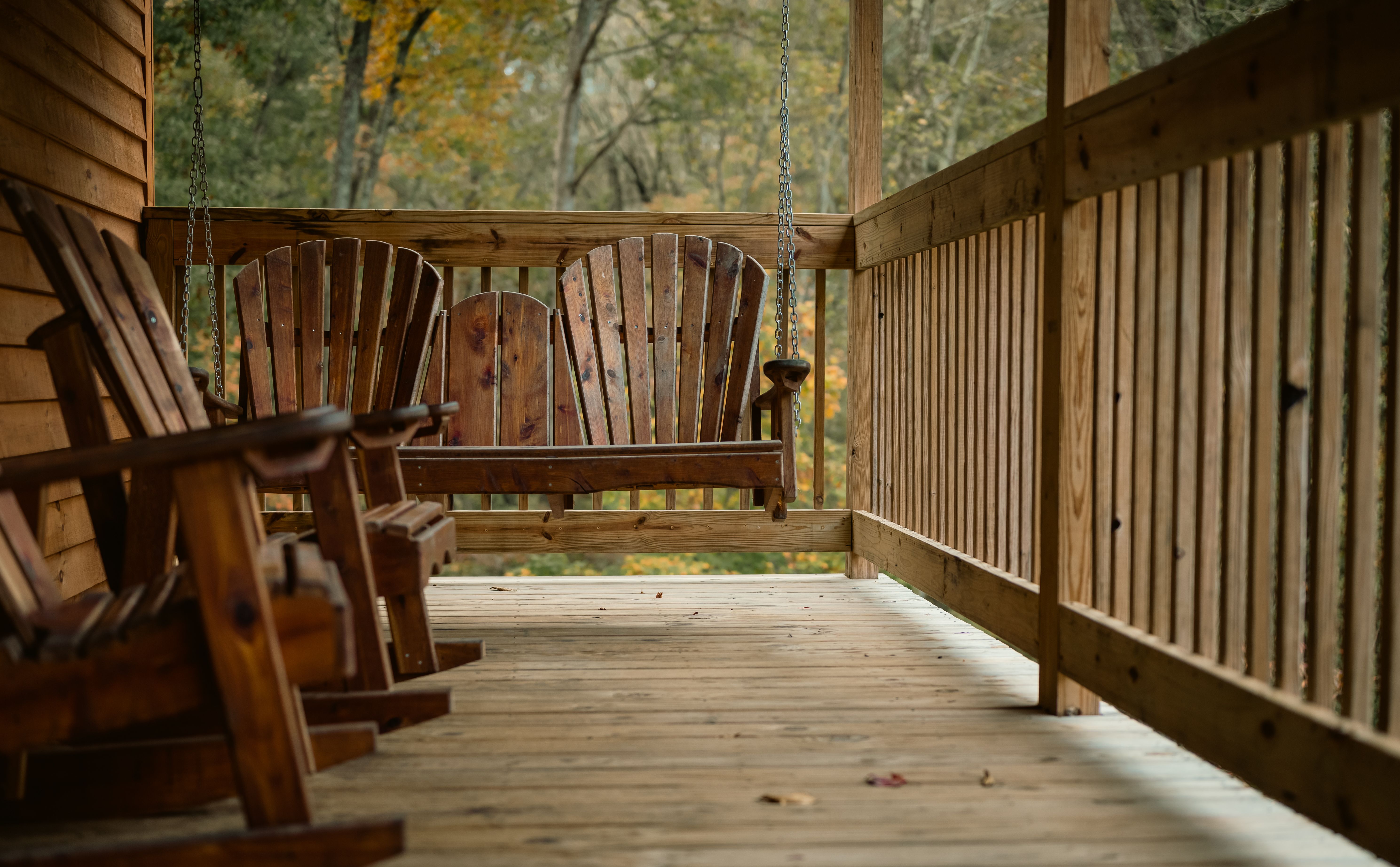
A porch swing is one of the few outdoor pieces that works as both seating and a conversation piece. In rural settings, it often becomes the place people gravitate toward at the end of the day. For a swing to last, the hanging point matters as much as the swing itself. Mount it to a ceiling joist or a rated hook, not just a decorative beam, and check the chains or ropes each season for wear.
Some practical points to keep in mind:
- Use weather-resistant wood or powder-coated steel for the frame
- Choose a swing wide enough for two adults, typically 48 inches or more
- Leave clear space behind the swing so it does not hit a wall or railing
Idea 3: A Dining Zone with a View
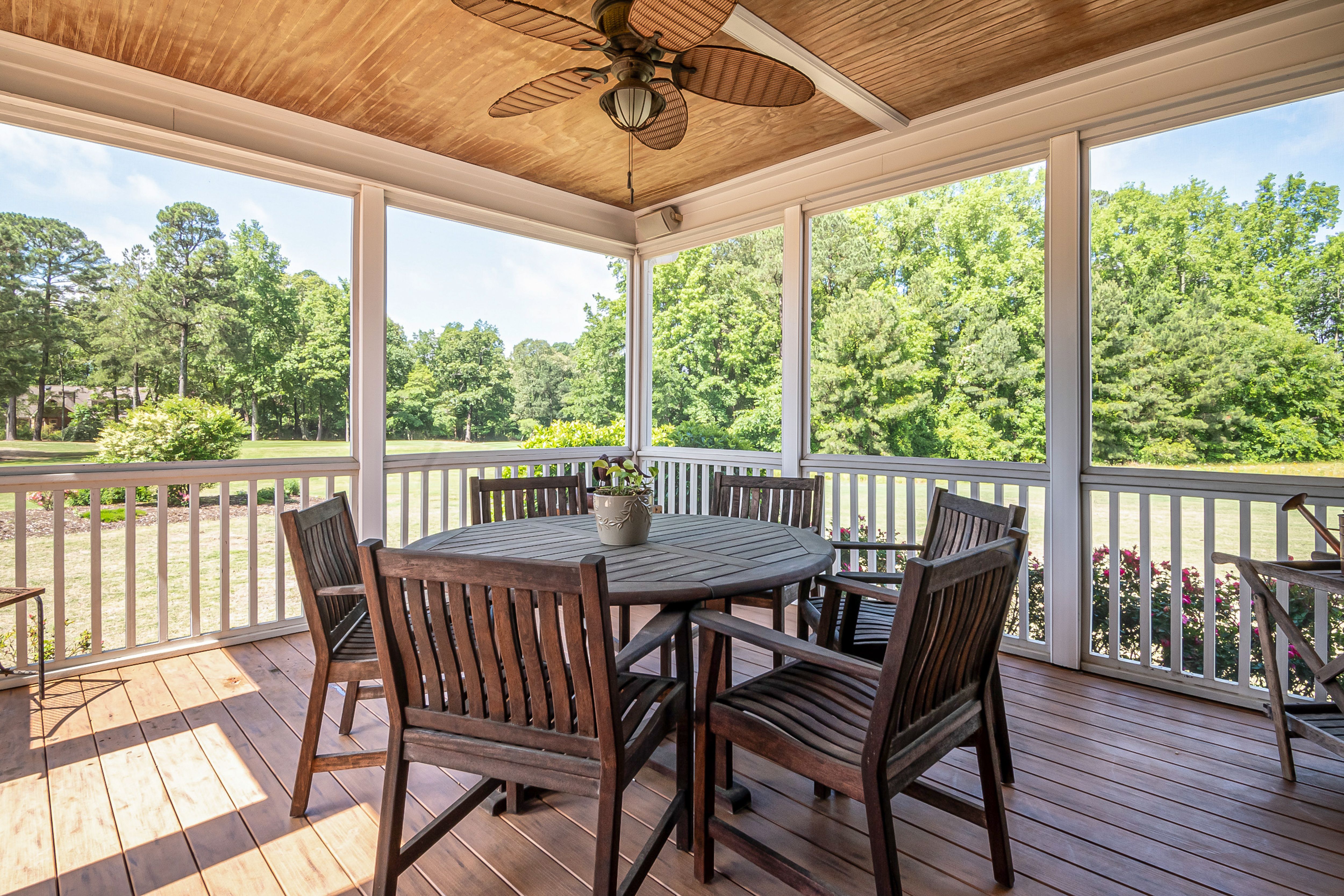
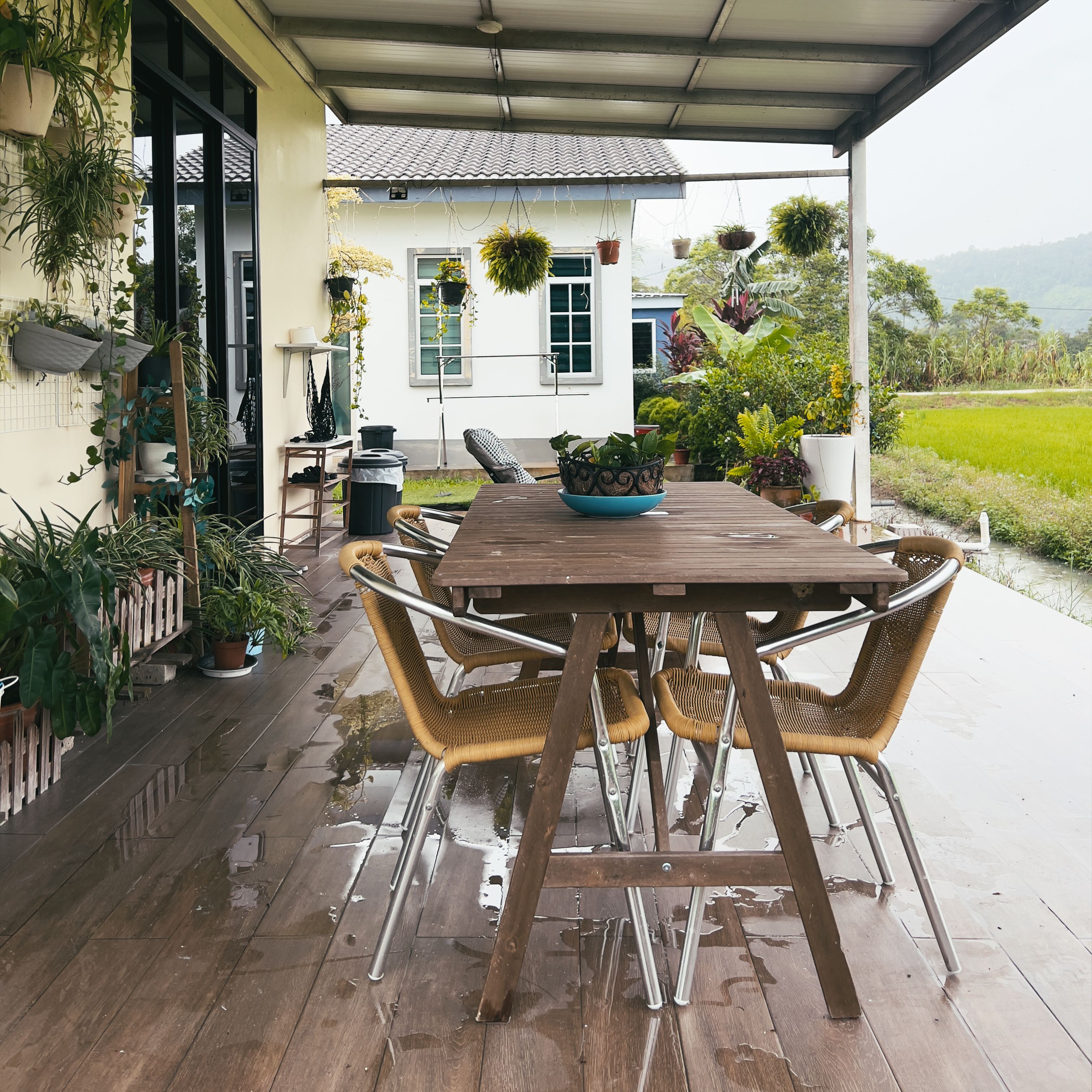
Many rural homes are built to take advantage of a view, so the dining area is often the best place to set a table. Position the table so guests face the landscape rather than the grill or the parking area. A sturdy wooden table with a few weathered chairs fits the farmhouse look, and a simple lantern or string light at the center adds evening warmth without overwhelming the scene.
A dining zone works best when it includes:
- A level surface that will not wobble on uneven ground
- Access to the kitchen door to reduce trips with dishes
- Planters or low shrubs that frame the view without blocking it
Idea 4: A Swing Bench Against a Barn Wall
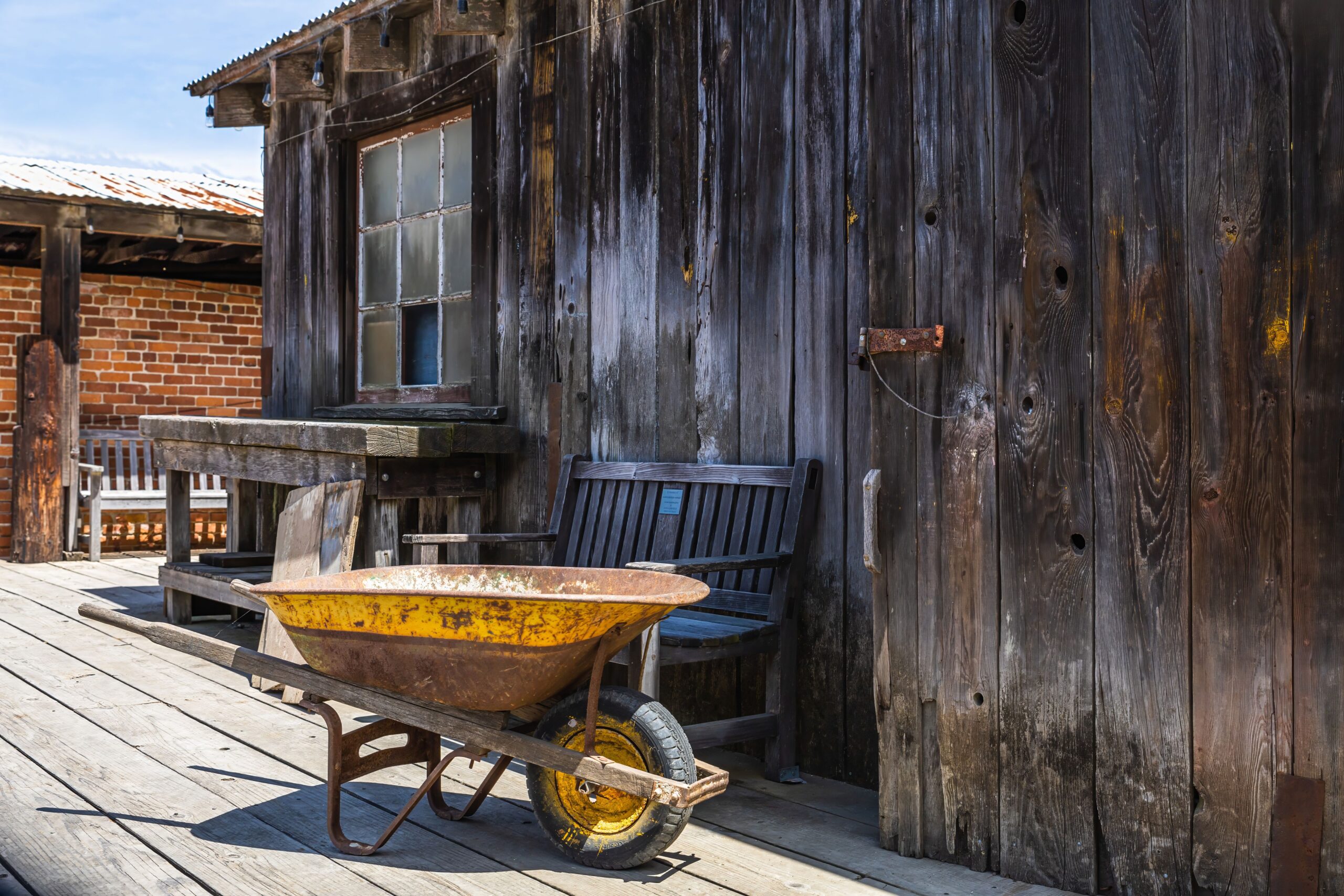
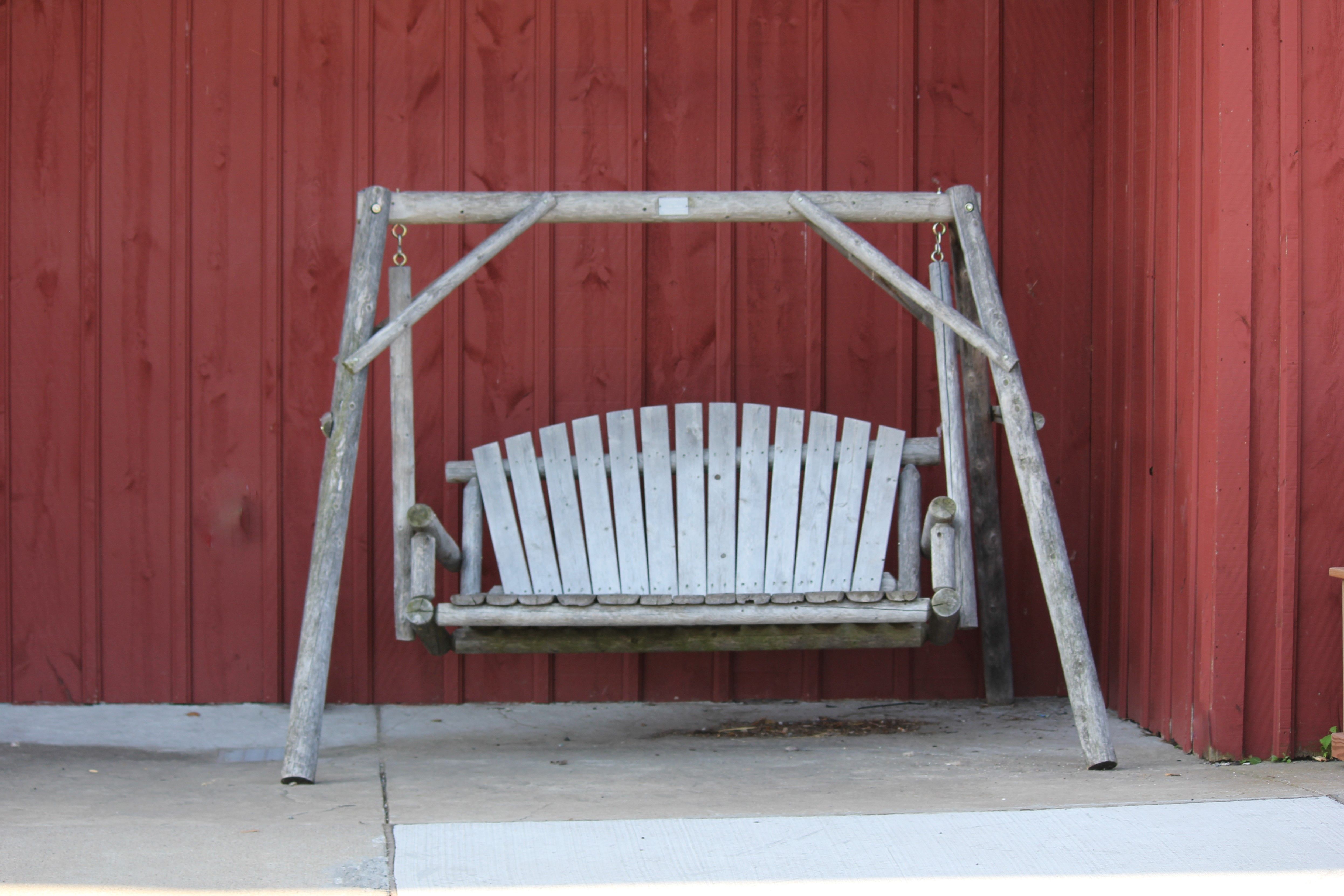
Barn walls and weathered outbuildings are natural backdrops for farmhouse seating. A wood swing bench placed against a dark barn wall creates a strong visual anchor and a quiet nook for reading. If the bench sits in full afternoon sun, consider a small canopy or a row of tall grasses to soften the light. Placing the bench on a gravel or stone pad helps keep mud away from the seat and makes the area easier to clean.
Planning Shade and Comfort
Shade decides how often a patio gets used. In open country, a patio with no overhead cover can feel unbearable by midday in summer, even with a pleasant breeze. Extension specialists often recommend a mix of permanent and temporary options. Shade trees planted on the south or west side of a yard can block the strongest afternoon sun over time, though they take years to mature. In the meantime, a canopy, umbrella, or shade sail can provide immediate relief. University of Illinois Extension’s backyard shade ideas cover several of these options, along with water features that cool the air as breezes pass over them.
Common shade options include:
- Shade trees planted to the south or west of the patio
- Pergolas or gazebos for permanent cover
- Retractable awnings or shade sails for adjustable coverage
- Outdoor curtains that can be pulled when wind or sun shifts
Anchor any canopy or shade sail firmly. Wind can lift lightweight structures quickly on open land, so secure posts in concrete and tighten all fittings before storms.
Layout, Privacy, and Flow
Good farmhouse patios are planned around how people move. Start by noting where the door opens, where the sun sets, and which direction the prevailing wind comes from. Those three details will guide where seating should face and where a windbreak might help. Oklahoma State University Extension’s guide to creating outdoor rooms explains how floors, walls, and overhead elements define separate zones in a landscape, which is useful when a large rural lot needs structure.
A simple planning checklist can help:
- Map the path from the kitchen or main door to the patio
- Set the main seating area out of direct wind where possible
- Use shrubs, lattice, or a fence line for privacy without enclosing the space
- Leave room for a grill, firewood storage, or a small garden bed
Frequently Asked Questions
What is the most affordable farmhouse patio material?
Poured concrete is often the least expensive option for a large area, though it needs proper joints and a stable base to avoid cracking. Gravel or simple stone pavers can also keep costs down while still giving a rustic look.
How can I make a rural patio usable in summer heat?
Combine shade with airflow. A roof, pergola, or shade sail blocks direct sun, while placing seating where breezes cross the space helps cool the area. Light-colored furniture and cushions also stay cooler than dark fabrics.
Do I need a permit for a pergola or covered patio?
Requirements vary by county and municipality. Check local building rules before building a permanent roof or structure, especially if it is attached to the house or close to property lines.
Bringing the Patio Into Daily Life
The most memorable farmhouse patios are rarely the most elaborate. They are the ones that fit the land, the weather, and the way a household actually spends its evenings. Start with one dependable zone, choose materials you will not have to fight every season, and add details over time as you learn where the wind blows and where the light falls in the late afternoon.