
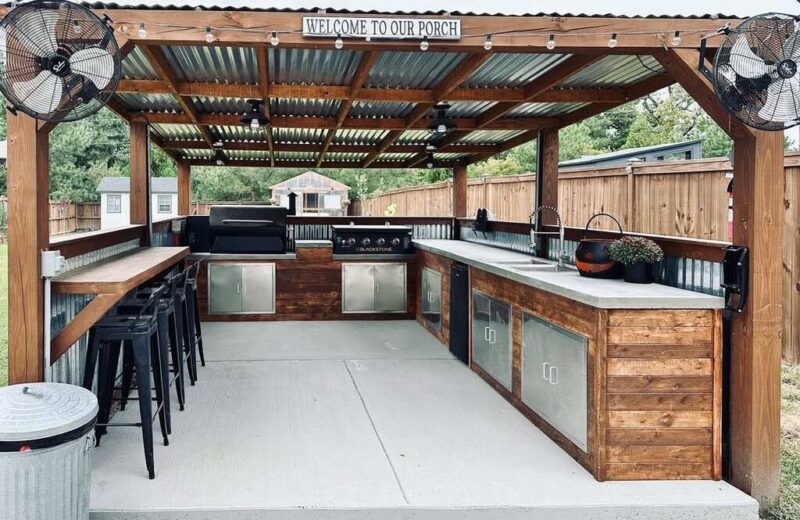
A covered outdoor kitchen sounds like a luxury feature, yet many functional setups cost far less than people expect. With basic planning, practical materials, and a clear idea of how the space will actually get used, an outdoor cooking area can come together without draining savings.
The goal here stays simple. Shelter from sun and rain, a safe place to cook, and surfaces that handle heat and weather without fuss.
The guide below walks through realistic decisions, cost-saving tradeoffs, and build steps that suit homeowners who want results without perfection chasing.
Start With A Clear, Honest Plan
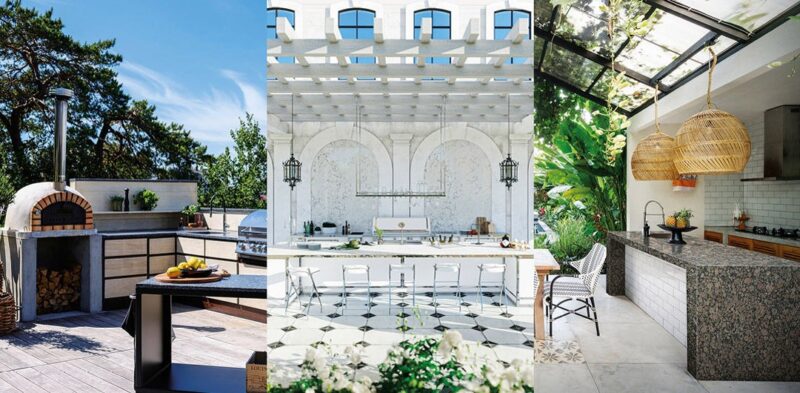
Before sketching layouts or pricing grills, decide how the space will serve daily life. Weekend grilling twice a month calls for a different setup than nightly dinners outdoors. Overbuilding leads to wasted money fast.
Early planning often involves sketches, rough layouts, and notes, which is where you can save massive time with an brochure maker when turning ideas into something visual and easy to review.
Ask a few grounded questions early:
- How many people usually cook together?
- Gas or charcoal?
- Storage needs for utensils, fuel, and cookware?
- Permanent structure or something semi-mobile?
A compact plan often works best. A straight-line kitchen against a wall or fence costs less than islands or wraparound counters. Coverage matters more than square footage.
Choosing The Right Location
Pick a spot close to the house to reduce material runs and utility extensions. Shorter distances save money on gas lines, electrical conduit, and drainage work.
Key placement checks:
- Natural drainage away from the cooking zone
- Clearance from overhanging branches
- Smoke path that avoids windows and doors
- Local setback rules and fire codes
A concrete patio or existing pavers offer a strong base and skip excavation costs entirely.
Budget-Friendly Cover Options That Work
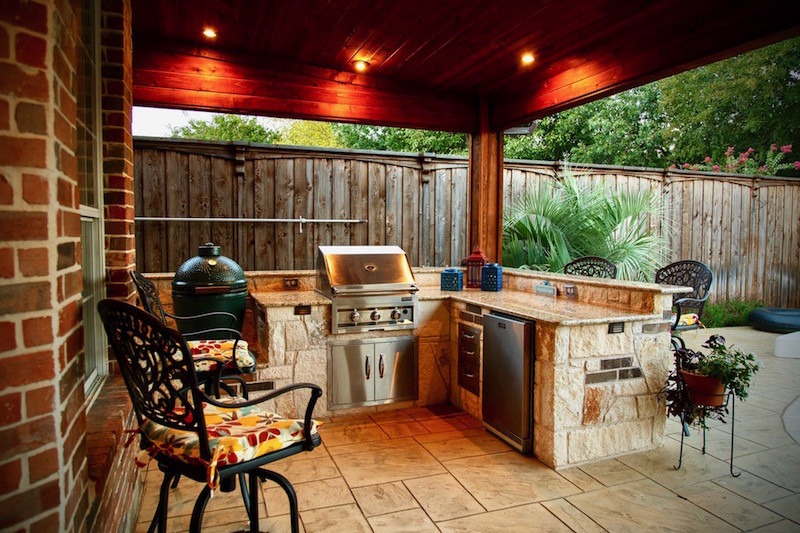
Coverage defines comfort. Sun protection alone changes how often the space gets used. Rain protection makes cooking possible year-round in many climates.
Simple Roof Structures
Lean-to roofs anchored to the house cost less than freestanding builds.
Common low-cost materials:
- Corrugated metal panels
- Polycarbonate roofing sheets
- Asphalt shingles over plywood
Metal panels remain popular for budget builds. Lightweight, durable, and quick to install, they handle heat and grease better than fabric options.
Pergolas With Panels
A wood pergola paired with clear or tinted panels balances cost and appearance. The open frame keeps airflow moving while panels block rain.
Avoid fabric canopies for cooking zones. Grease buildup and heat damage shorten the lifespan quickly.
Framing Without Overspending
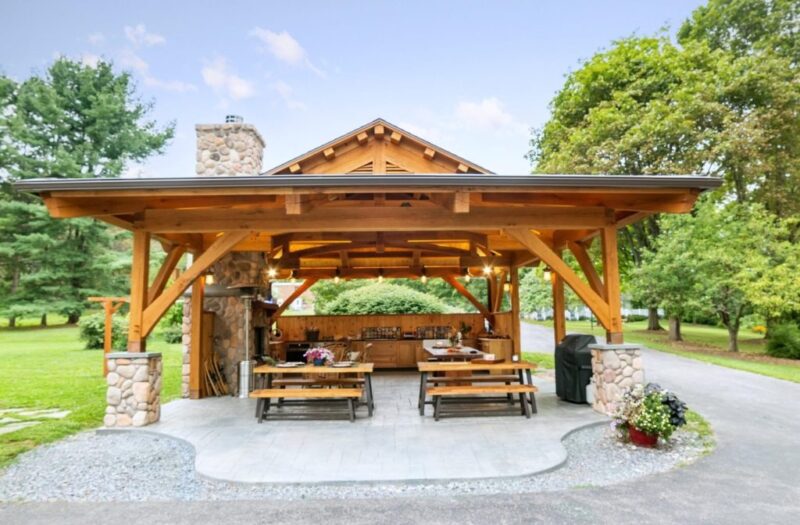
Pressure-treated lumber handles outdoor exposure well and stays affordable. Steel framing costs more and usually requires specialized tools.
Smart framing choices:
- 4×4 posts set in concrete for roof support
- 2×6 rafters spaced correctly for panel load
- Ledger boards bolted into house framing when allowed
Paint or stain adds years of life and improves appearance without major cost.
Cooking Equipment That Stays Practical
Skip showroom appliances. Outdoor kitchens function best when equipment stays simple and durable.
Grills And Burners
A quality standalone grill often beats built-in models on price and flexibility. Many homeowners frame counters around existing grills instead of buying custom units.
Affordable cooking options:
- Standard gas grill with side burner
- Charcoal grill with ash control
- Portable propane burners for pots and pans
Used grills in good condition often sell at deep discounts, especially at end-of-season sales.
Avoid Over-Installing Utilities
Electric outlets and gas lines add cost fast. Extension-rated outdoor cords and propane tanks cover many needs early on. Permanent hookups can wait until usage proves consistent.
Countertops That Handle Weather And Heat
Outdoor countertops need toughness more than beauty.
Budget-Friendly Counter Materials
Concrete remains one of the strongest low-cost choices. Poured-in-place or precast slabs work equally well.
Other options include:
- Porcelain tile on cement board
- Sealed plywood with stainless steel overlay
- Stone remnants from local fabricators
Avoid laminate. Heat and moisture destroy it quickly.
Counter Height Matters
Standard kitchen height often feels low outdoors. Aim for 36 to 38 inches to reduce back strain during prep.
Storage Without Custom Cabinet Prices
Custom outdoor cabinetry gets expensive fast. Open storage works better for budget bui
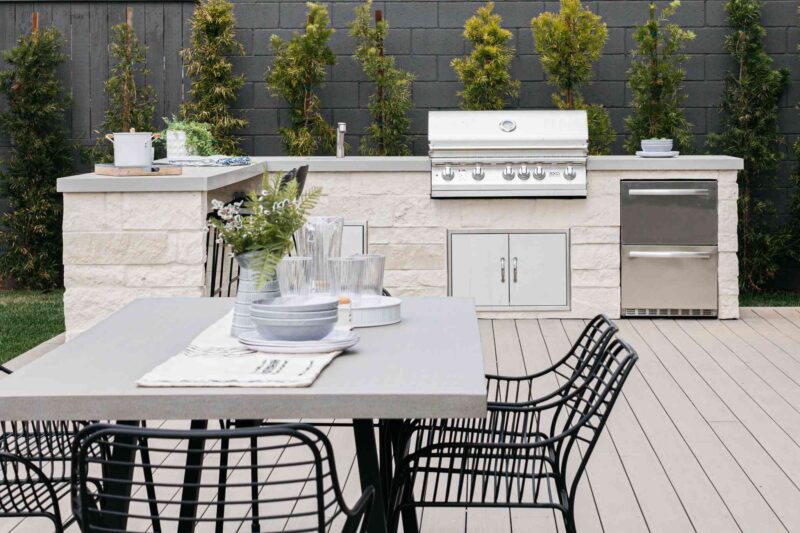
lds and allows faster drying after rain.
Practical storage ideas:
- Concrete block bases with wood doors
- Stainless steel shelving
- Weatherproof storage bins under counters
Use marine-grade hinges and latches for any enclosed areas.
Flooring That Saves Money And Time
Existing surfaces save the most. If none exist, pavers offer flexibility and lower labor costs than poured slabs.
Low-cost flooring choices:
- Interlocking concrete pavers
- Gravel with stepping stones
- Outdoor-rated porcelain tiles
Avoid slick finishes. Grease and moisture demand traction.
Ventilation And Smoke Control
Covered kitchens need airflow. Heat and smoke buildup ruin comfort and damage roofing materials.
Keep at least one side open. Roof pitch helps smoke escape naturally. Ceiling fans rated for outdoor use improve circulation without complex ducting.
Lighting That Feels Comfortable
Lighting extends usability into evening hours. Keep it simple.
Effective budget lighting options:
- LED string lights under roof beams
- Solar pathway lights around the perimeter
- Clamp lights with outdoor-rated bulbs
Hardwired lighting adds polish later but stays optional early on.
Cost Breakdown Example
A basic covered outdoor kitchen often fits within a modest budget when planned carefully.
| Component | Estimated Cost |
| Roof structure and panels | $600 to $1,200 |
| Lumber and framing hardware | $400 to $800 |
| Grill and burner setup | $300 to $900 |
| Countertops and base | $500 to $1,000 |
| Lighting and accessories | $100 to $300 |
| Total range | $1,900 to $4,200 |
Prices vary by region and material availability, yet staying focused on essentials keeps totals manageable.
Permits And Safety Considerations
Check local rules before building. Many areas allow patio covers without permits under certain sizes, though gas lines often require inspection.
Safety basics matter:
- Fire-resistant surfaces near grills
- Proper clearance above cooking equipment
- Stable footings for roof supports
- GFCI outlets for electrical components
Skipping safety leads to expensive fixes later.
Common Budget Mistakes To Avoid
Several patterns push costs higher than necessary.
Watch out for:
- Overbuilding counters that rarely get used
- Buying appliances before final layout
- Ignoring drainage and slope
- Choosing decorative materials over durable ones
A functional space always beats a photogenic one that never gets used.
Building In Phases Works Well
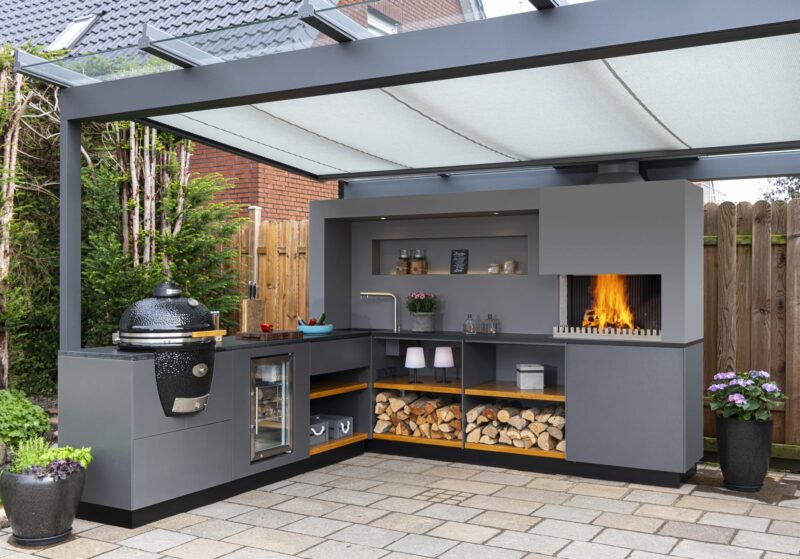
One major advantage of simple outdoor kitchens lies in flexibility. Start with coverage, grill, and prep surface. Storage, lighting upgrades, and utility hookups can follow later.
Phased builds reduce upfront spending and allow real-world testing before committing further.
Final Thoughts
A covered outdoor kitchen does not need to impress guests or copy magazine layouts. Comfort, shade, and reliable cooking space define success far better than stone veneers or high-end appliances.
With clear priorities and grounded material choices, an outdoor kitchen becomes part of everyday living without financial strain.